
Have you ever thought about if the toys in your nursery are good for your baby? Or are they just taking up space? Choosing the right toys for your baby is very important. It’s not just about fun.
You want your home to be a safe place for your baby to learn and grow. You want to make sure they are safe from harm. Finding the right toys is key to a happy home.
By choosing quality over quantity, you can get toys that are good for your baby. These toys help your baby learn and stay safe. This way, you focus on what’s best for your baby’s growth.
Key Takeaways
- Focus on developmental milestones rather than just buying more items.
- Prioritize high-quality materials to ensure long-term durability and health.
- Check for small parts that could pose a choking hazard during play.
- Choose items that encourage active engagement instead of passive observation.
- Create a clutter-free space to help your child concentrate and explore safely.
Understanding the Importance of Safe Baby Toys
Your baby grows fast in their early years. This makes choosing safe baby toys very important. It’s not just about how long they last. It’s about keeping your child safe during their most vulnerable times.
Why Material Safety Matters for Infants
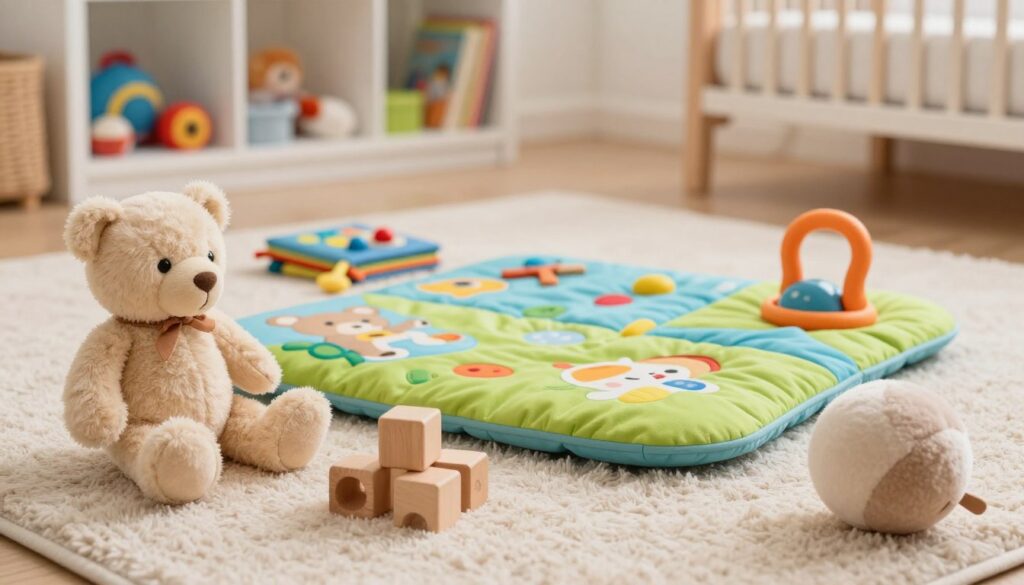
Infants learn by touching and tasting things. Their bodies are still growing and can easily get sick from bad materials.
Many toys have hidden toxins. These can harm your baby during play. Choosing non-toxic materials helps keep your baby safe. Look for toys made from natural things that don’t give off bad smells.
Recognizing Common Hazards in Low-Quality Toys
Finding safe toys can be hard. But, there are things to watch out for. Bad toys have loose parts, sharp edges, or break easily.
Check every toy before letting your child play. If it feels weak or smells bad, don’t buy it. Here’s a table to help you tell safe toys from bad ones.
| Feature | Safe Toy Characteristics | Hazardous Toy Red Flags |
|---|---|---|
| Material | Natural wood, organic cotton | Cheap, thin, brittle plastic |
| Construction | Solid, smooth, rounded edges | Sharp points, loose screws |
| Paint/Finish | Water-based, non-toxic dyes | Chipping paint, lead-based pigments |
| Durability | Resistant to impact and wear | Small parts that detach easily |
Being careful and informed keeps your home safe for your baby. Buying safe baby toys lets you relax while your child learns and grows.
Navigating Global and Indian Safety Standards
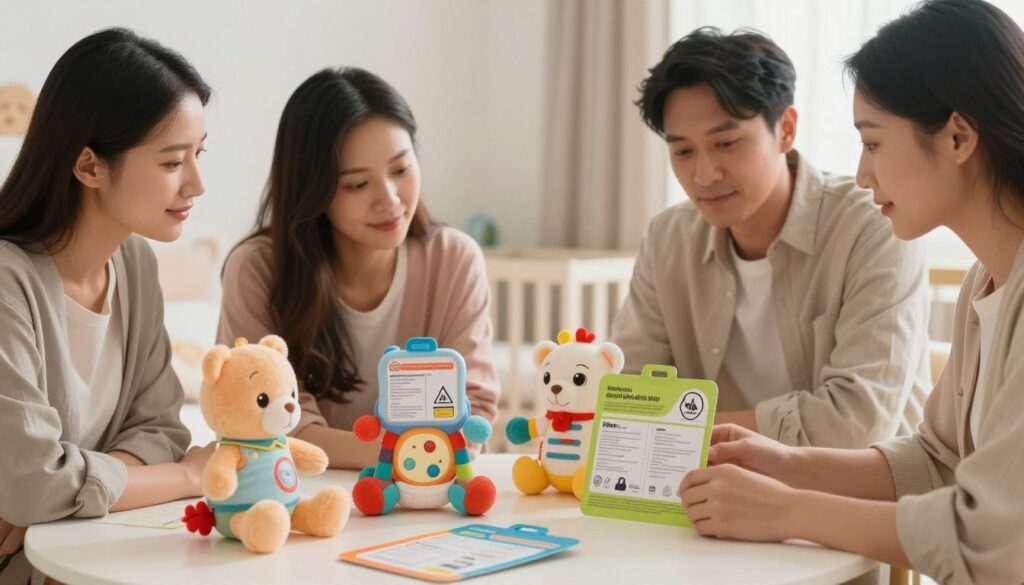
It can be hard for parents to understand global and Indian safety standards. Toys have symbols on them that help keep kids safe. These symbols mean the toys have been tested well.
Decoding BIS Certification and ISI Marks
In India, the Bureau of Indian Standards (BIS) checks if products are good. Look for the ISI mark on toys. It means the toy is safe and meets government rules.
“Safety is not just a feature; it is the foundation upon which every childhood memory is built.”
Seeing the ISI mark means the toy is safe. It shows the toy follows Indian rules. Always look for this mark to keep your child safe.
Identifying International Safety Labels like ASTM and EN71
Many toys also have international safety labels. The ASTM F963 standard is used in the U.S. EN71 is used in Europe. These labels mean the toy is safe for your child.
Knowing these labels helps you choose safe toys. Here’s what they mean:
- ASTM F963: The toy is safe from harmful materials and sharp edges.
- EN71: The toy meets strict European safety rules.
- BIS/ISI: The toy follows important Indian safety rules.
By looking for these labels, you keep your child safe. Checking these labels makes playtime fun and safe.
Selecting Non-Toxic and Eco-Friendly Baby Toys
Your baby’s health is very important. They touch and chew on things every day. Choosing non-toxic baby toys is a big job for parents. It helps keep your child safe and healthy.
The Dangers of Phthalates and BPA in Plastics
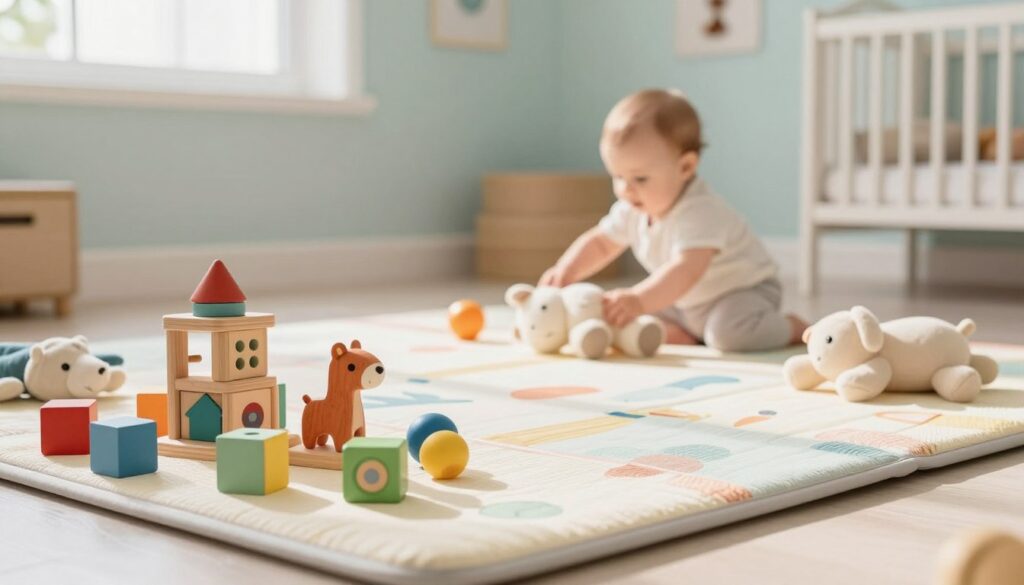
Many plastics have bad chemicals. Phthalates make plastics soft but are harmful. BPA is in hard plastics and can act like hormones.
Choosing bpa-free baby toys keeps your baby safe. Look for labels that say they are safe. Keeping your baby safe is very important.
Benefits of Choosing Organic Cotton and Natural Wood
Choosing eco-friendly baby toys is good for your baby and the planet. Natural wood toys are safe and last long. They feel different from plastic.
Organic baby toys are soft and safe. They are made from cotton without bad chemicals. These toys are good for your baby and the earth.
How to Verify Material Authenticity
Checking the quality of natural baby toys takes some work. Look for special labels that say they are safe. Check the company’s website for more information.
If a toy says it’s safe, it should have proof. If you’re not sure, ask the company. This makes sure your baby is safe.
| Material Type | Safety Profile | Key Benefit | Sustainability |
|---|---|---|---|
| Organic Cotton | Excellent | Hypoallergenic | High |
| Natural Wood | Excellent | Durable | High |
| BPA-Free Plastic | Good | Easy to Clean | Low |
| Standard Plastic | Poor | Inexpensive | Very Low |
Matching Toys to Developmental Milestones
Choosing the best baby toys for development is important. You need to watch your child’s growth closely. As they grow, their needs change from simple to complex tasks.
By picking toys that match their growth, you help them grow fast.
Toys for Sensory Exploration in the First Six Months
In the first six months, babies learn a lot. They learn through sight, sound, and touch. Toys with bright colors and soft textures are great for their brains.
Look for toys that are safe and soft. Soft rattles, fabric books, and mobiles are good choices. They help babies track and reach, which is important for moving later.
Encouraging Motor Skills from Six to Twelve Months
When babies sit up and crawl, they start to explore more. The best baby toys for development now help with moving and hand-eye coordination. Toys that make them reach, pull, and stack are great.
Try soft blocks or toys that they can push. These toys help them feel confident as they move from crawling to standing. Active play is key for building strength and understanding space.
Supporting Cognitive Growth in the Second Year
In the second year, babies start to understand cause and effect. They like toys that let them try new things, like shape sorters or puzzles. These toys help them think and improve their fine motor skills.
Choose toys that let your child use their imagination. Toys that need active play help them learn and stay curious.
| Age Range | Developmental Focus | Recommended Toy Type |
|---|---|---|
| 0-6 Months | Sensory Awareness | Soft Rattles & Mobiles |
| 6-12 Months | Motor Coordination | Stacking Blocks & Push Toys |
| 12-24 Months | Cognitive Problem Solving | Shape Sorters & Puzzles |
Evaluating Durability and Structural Integrity
You need to check every item your baby touches yourself. Physical inspection is key to keeping toys safe. Look at new and old items to make sure they can handle daily play.
Checking for Small Parts and Choking Hazards
Infants learn by mouthing things, so small parts are a big risk. Do a pull test on toys to see if parts come off easily. If something feels loose, take it away from your child right away.
Make sure no toy part can fit in a toilet paper roll. This test helps spot choking hazards. Pick safe baby toys with parts that can’t come off during play.
Testing for Sharp Edges and Loose Components
It’s not just about the materials. Feel toys for sharp edges or hidden burrs. Even a small crack can become a sharp hazard later.
Check all joints and screws to make sure they’re tight. If something feels loose, fix it or throw it away. A sturdy construction keeps toys from breaking into pieces during play.
Assessing Paint Quality and Non-Toxic Finishes
The finish on a toy is very important for your baby’s health. Make sure it’s free of lead and harmful chemicals. Look for non-toxic baby toys with water-based or food-grade finishes.
Try rubbing a damp white cloth on the toy’s surface. If color comes off, the finish is bad. Always choose items with durable, non-toxic coatings that can handle saliva and mouthing.
Prioritizing Open-Ended Play for Meaningful Development
Simple toys are often the best for your baby’s growth. Open-ended play lets your child explore freely. It’s a top way to help them learn on their own.
Why Simple Toys Often Outperform Electronic Gadgets
Electronic toys can make your baby just watch. They might be fun at first, but they don’t really help your baby learn. True cognitive growth comes from your baby doing things themselves.
Simple toys like wooden blocks or soft shapes make your baby think. They don’t need batteries or lights, but they keep your baby busy and learning.
Encouraging Imagination Through Versatile Playthings
Versatile toys let your baby’s imagination run wild. A set of stacking cups or a simple doll can be anything your baby wants. This helps build important thinking skills.
When toys can be used in many ways, your baby learns to solve problems. Experts say the best toys are those that make your baby think and move. Switching toys keeps play exciting for your baby.
| Feature | Electronic Toys | Open-Ended Toys |
|---|---|---|
| Child’s Role | Passive Observer | Active Creator |
| Skill Focus | Limited/Repetitive | Problem-Solving |
| Longevity | Short-term Interest | Long-term Engagement |
| Developmental Impact | Low | High |
Shopping Tips for Ethical and Sustainable Brands
Choosing the right brands for your baby is key. It makes sure they play with safe, ethically made toys. By picking ethical manufacturing, you help make the world safer for your child. You also push companies to do better.
Choosing eco-friendly baby toys is more than a trend. It’s a promise to your child’s health and the planet’s future.
Researching Manufacturer Transparency
Before buying, check the company’s background. Good brands share info about their supply chain and how they make things. Look for details on their website about materials and factory conditions.
If a company doesn’t talk about where things are made, it’s a warning sign. Transparency shows a brand is trustworthy. You should know the toys are safe and made fairly.
Supporting Local Artisans and Sustainable Practices
Buying from local artisans in India is a great choice. They use natural materials and old techniques, safer than plastic. These eco-friendly baby toys last longer, so you don’t need to buy new ones often.
Local making also cuts down on carbon emissions from shipping. Buying from small, sustainable businesses helps your community. You get unique, well-made items that big brands can’t match.
Maintaining Hygiene and Toy Longevity
Keeping your baby safe starts with clean toys. Natural baby toys are safer, but need special care. This keeps them in good shape.
Safe Cleaning Methods for Wooden and Fabric Toys
Wooden toys are good against germs, but need cleaning. Don’t soak them in water. This can harm the wood.
Wipe them with a damp cloth and mild soap. This keeps them clean.
For fabric toys, follow the washing guide. Most can be hand-washed with gentle detergent. Dry them well to avoid mold.
When to Repair or Discard Damaged Items
Check toys weekly for damage. Look for loose threads or broken wood. If it’s badly damaged, it’s safer to get a new one.
For small fixes, like a loose seam, use organic thread. But, if parts are missing or material is falling apart, throw it away. Keeping your baby safe is more important than fixing a toy.
Creating a Safe Play Environment at Home
A well-organized home is key for a worry-free play experience for your child. Choosing good toys is important. But, the space where your baby plays is just as crucial for safety. By arranging your living area well, you can lower risks and let your child play safely.
Organizing Toys to Prevent Clutter and Accidents
Clutter on the floor can cause trips and falls for toddlers. You need a dedicated storage system like bins or shelves to keep toys up when not in use. This keeps paths clear and lowers the chance of accidents during play.
Try not to have too many toys out at once. This makes it easier to keep things tidy. Check your storage areas often for broken or loose parts to avoid dangers.
Supervision Strategies for Different Age Groups
Your role changes as your child grows. For babies, constant, close-proximity supervision is needed because they are very vulnerable. Stay close to keep them safe from small objects and dangers.
When your child gets older, you can be more supportive and observant. But, still watch them closely to keep them safe from dangers like stairs or heavy furniture. Setting clear rules and staying involved in their play helps them learn while staying safe.
Conclusion
Choosing the right toys for your little one is important. It helps them grow and learn. Look for toys that are safe, made well, and match their age.
Brands like Shumee and Ariro make great toys. They use natural materials and are made ethically. These toys are safe for your child and help the planet.
Make sure to check every toy before buying. This way, playtime is fun and safe. Every choice you make helps your baby’s future.
Watch how your child plays and learns. Your help makes playtime even more special. Keep finding new ways to encourage their creativity and growth.